

The process industry landscape is changing faster than at any previous point in its history. Energy efficiency mandates, decarbonisation targets, increasingly demanding process fluids, digital integration requirements, and tighter safety regulations are all placing new pressures on pumping equipment and the manufacturers who supply it. Understanding how leading Pump Suppliers are responding to these demands helps procurement and engineering teams identify suppliers who are genuinely positioned to meet the requirements of modern industrial operations, rather than those still offering yesterday’s solutions in today’s packaging.
Energy Efficiency as a Design Priority, Not an Afterthought
Energy consumed by pumping systems represents a significant proportion of total industrial facility energy use, estimates typically place it at 20 to 30 percent of total electrical energy consumption in process plants. Reducing this is now a genuine business priority driven by both cost and regulatory pressure.
Leading pump manufacturers are responding through:
- Extended pump efficiency ranges (EER) that deliver higher hydraulic efficiency across a wider operating range
- Variable speed drive compatibility as standard, allowing pump speed to match actual system demand rather than operating at fixed speed against a throttling valve
- Hydraulic redesign of impeller and casing geometry using computational fluid dynamics to minimise internal losses
- Closer tolerancing of wearing ring clearances to reduce internal recirculation
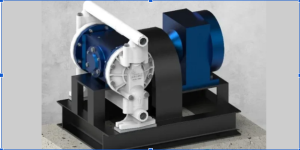
An EODD pump in a chemical transfer service, for example, may now be specified with enhanced air efficiency valve systems that significantly reduce compressed air consumption compared with older designs, a direct energy cost saving for the operator.
Digital Integration and Condition Monitoring
Modern process facilities expect their critical rotating equipment to be monitored continuously, with early warning of developing faults rather than reactive breakdown maintenance. Pump manufacturers are increasingly building condition monitoring capabilities directly into their equipment:
| Monitoring Parameter | What It Detects Early |
| Vibration signature | Bearing wear, impeller cavitation, shaft misalignment |
| Temperature at bearings | Lubrication failure, bearing overload |
| Power consumption trend | Wear ring deterioration, impeller damage, system changes |
| Differential pressure across pump | Performance degradation, wear detection |
Integration of these monitoring systems with plant-wide SCADA and asset management systems allows maintenance to be planned based on actual equipment condition rather than fixed time intervals, reducing both maintenance cost and unplanned downtime.
Responding to New Process Fluid Challenges
Process fluids in modern industrial applications are becoming more demanding. Battery manufacturing processes involve aggressive lithium electrolytes. Green hydrogen production requires hydrogen-compatible sealing and materials. Carbon capture applications demand pumps for highly solvent-laden fluids under demanding pressures. Biofuel production involves fermentation broths with unique rheological and foaming characteristics.
Pump Suppliers meeting these challenges are investing in:
- Extended material portfolios beyond standard stainless steel and cast iron
- Seal technology development for new chemical environments
- Collaboration with process technology developers at the project planning stage rather than at the equipment procurement stage
- Application testing facilities that can validate pump performance with novel process fluids before commissioning
Safety and Compliance in Hazardous Applications
Safety requirements in oil and gas and chemical processing continue to tighten, driven by incident learning and regulatory development. Pump manufacturers supplying these sectors must demonstrate compliance with increasingly rigorous standards across multiple dimensions:
- API 610 for centrifugal pumps in petroleum, petrochemical, and natural gas industries
- API 675 for controlled-volume metering pumps
- ATEX directive compliance for equipment in potentially explosive atmospheres
- Functional safety assessment in line with IEC 61511 for safety-instrumented systems incorporating pump equipment
Pump Suppliers who treat compliance as an integral part of their product development process rather than a certification exercise produce equipment that is genuinely safer, more reliable, and less likely to require expensive retrofits when regulatory requirements tighten further.
Aftermarket Support as a Competitive Differentiator
The aftermarket relationship, spare parts, service support, technical advice, and performance optimisation, has become an increasingly important differentiator among Pump Suppliers. Process industry operators place significant value on:
- Rapid spare parts availability from local or regional stockholding
- Service teams with genuine application knowledge rather than generic mechanical skills
- Performance audit programmes that identify where pump efficiency has degraded and quantify the cost of restoring design performance
- Life extension programmes that evaluate whether overhaul or replacement better serves the customer’s economic interests
Conclusion
The Pump Suppliers who are genuinely meeting modern process industry demands are those investing in energy efficiency, digital capability, materials development, safety compliance, and aftermarket excellence simultaneously, not focusing on any single dimension at the expense of others. Process industry operators who choose their pump suppliers based on this broader capability assessment consistently achieve better outcomes than those focused solely on initial purchase price. NND Oil & Gas works with Pump Suppliers at the forefront of these developments, ensuring that its customers have access to pumping solutions that meet the full range of demands that modern process operations place on critical rotating equipment.