
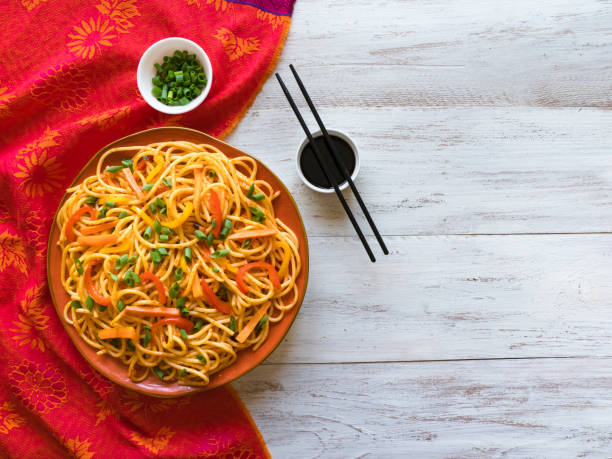

Few foods in the thriving realm of international cuisine have been as successful in balancing taste, texture, and cultural fusion as Hakka noodles. This popular Indo-Chinese meal has made a lasting impression on foodies worldwide, leaving a lasting impression on their stomachs and hearts. Hakka noodles, distinguished by their stir-fried noodles mixed with vibrant vegetables, zesty sauces, and fragrant seasonings, are the epitome of culinary harmony. However, there is a fascinating history of migration, adaptation, and innovation hidden under its delectable flavor.
Although Hakka noodles are a common street food item in India today, their history dates back to the Chinese Hakka people who immigrated to the country in the late 19th and early 20th centuries. Over ages, the Hakka people, who were originally from northern China, traveled south and eventually made their way to India and other areas of the world. Many of them made their homes in Kolkata (formerly Calcutta), where they worked as shoemakers, tanners, and, of course, restaurateurs.
If one is looking for a real Chinese cuisine with the same name in mainland China, the word “Hakka noodles” is a bit misleading. In actuality, Hakka noodles, as they are known in India, are a distinctively Indian take on Chinese cuisine, illustrating how immigrants modified their traditional recipes to suit Indian tastes while utilizing locally accessible components. A key player in this growth was Kolkata’s Hakka community. Dishes like manchurian, Hakka noodles, and chili chicken started to show up on restaurant menus as their food grew in popularity among the locals, giving rise to what is now known as Indo-Chinese cuisine.
Hakka noodles’ unique flavor profile and cooking method distinguish them from other varieties of stir-fried noodles. Hakka noodles, which are usually made with a mixture of soy sauce, vinegar, green chilies, and garlic, are lighter and more fragrant than the thick soy-based sauces used in classic Chinese stir-fries. After boiling the noodles until they are barely cooked, never mushy, they are combined with oil, vegetables like bell peppers, cabbage, and carrots, and frequently meats like paneer, prawns, or chicken in a hot wok.
To preserve the crunchiness of the vegetables and the subtle chewiness of the noodles, the stir-frying is carried out over high heat. This method, called “wok hei” in Cantonese, which roughly translates to “breath of the wok,” is crucial for enhancing the smoky, slightly burnt flavor that enhances a delicious dish of Hakka noodles. Even a home-cooked version of this meal, when made carefully, can capture its flavor, even though most home cooks might not have access to restaurant-quality woks or burners.
Hakka noodles’ remarkable versatility is one of the factors contributing to its enormous appeal in India and abroad. For example, meat eaters might add sliced chicken, steak, or shrimp, while vegetarians can savor a version full of veggies and tofu or paneer. It can be eaten dry, as a snack on the street, or with a little gravy to go with a bigger dinner. Additionally, because the main ingredients—vegetables, garlic, soy sauce, and noodles—are so widely accessible, it has become a mainstay in both Indian homes and restaurants.
The dish’s flawless harmony of taste and texture is another factor contributing to its widespread appreciation. Multiple taste buds are simultaneously satisfied by the mix of the umami-rich sauces, chewy noodles, and crispy vegetables. A comfortable and stimulating depth is imparted by the addition of green onions, chili sauce, and maybe a little sugar or tomato ketchup. Hakka noodles are a favorite for experimentation because of its versatility; chefs and culinary enthusiasts from all over the world add their own touches, whether it’s with fish sauce, sesame oil, exotic vegetables, or local spices.
Despite being very different from the traditional dishes found in Beijing or Shanghai, Hakka noodles have come to be associated with “Chinese food” in India. It is an excellent illustration of how migration affects the evolution of cuisines. Hakka noodles are a prime example of the global phenomena of culinary adaptation, much to how pizza changed in America or how curry became a national cuisine in the UK. From upscale dining establishments to streetside carts, the Indo-Chinese food it symbolizes is now a well-established aspect of India’s metropolitan culinary culture.
For many people in India and the Indian diaspora, Hakka noodles also evoke fond memories. Growing up in metropolitan areas, millennials and Gen Z frequently spent their weekends at the local Chinese restaurant, where Hakka noodles were always served. Many people have pleasant recollections of eating it at food stands after work, at college parties, or in school canteens. The dish becomes more than just a tasty meal because of this emotional link; it becomes a reassuring routine, a taste of home, or a reminiscence of easier times.
Although Hakka noodles are unquestionably famous in India, they have also found their way into kitchens around the world, especially in nations like the US, Canada, and the UK that have sizable South Asian populations. Hakka noodles are increasingly frequently found on the menus of international fusion restaurants, as well as at food festivals, potluck meals, and YouTube cooking channels. Its universally adored flavor and ease of preparation have made it a popular dish that appeals to people of all ages and places.
Hakka noodles’ cultural significance also tells a larger tale of migration, identity, and belonging. This meal originated from a community that was trying to adapt to a new environment while preserving its traditions. It combines the strength of Indian spices with the customs of Chinese culinary arts. It is therefore more than just a fusion dish; it is a representation of cross-cultural communication. Every morsel conveys a tale of tenacity, creativity, and mutual preference.
A certain amount of ingenuity is also encouraged when making Hakka noodles. Hakka noodles are more forgiving than many traditional recipes that adhere to precise measurements. Do you want more spiciness? Increase the amount of chili sauce. Want something crunchy? Add some bean sprouts or water chestnuts. Are you watching your calorie intake? Use as little oil as possible and whole wheat noodles. Preparing food for children? Reduce the heat and eat a lot of vibrant vegetables. Because of its versatility, the meal has become a canvas for both professional chefs and home cooks.
The increasing health consciousness that is affecting the preparation and consumption of Hakka noodles nowadays is another intriguing feature. Reduced-sodium sauces, organic vegetables, and whole grain or gluten-free noodles are now popular choices. Vegetables can be air-fried rather than deep-fried, or stir-fried with less oil to accommodate contemporary dietary requirements without sacrificing the dish’s distinctive flavor. In this sense, Hakka noodles are changing once more, reflecting the shifts in the lifestyles of its fans.
To sum up, Hakka noodles are more than simply a tasty food; they’re a celebration of flavor, a culinary link between civilizations, and evidence of the strength of adaptation. Hakka noodles continue to enchant palates with their irresistible charm, whether they are prepared at home in a suburban kitchen in Toronto or consumed as street food on a busy evening in Mumbai. Their tale serves as a delicious reminder of how food can cross national boundaries, fit into new homes, and enrich people’s lives in the most reassuring and joyful ways. Consider the process of getting those perfectly stir-fried noodles to your plate as much as the flavor the next time you slurp a forkful of them.